Clear aligners and traditional braces can both straighten teeth effectively, but they differ in cost, comfort, appearance, treatment flexibility, and suitability for different orthodontic problems.
For many patients, the choice comes down to lifestyle as much as treatment outcomes. Some prefer the discreet appearance of clear aligners, while others value the predictability and versatility of traditional braces.
Understanding the differences can help you choose the treatment option that best suits your needs, goals, and budget.
What Are Clear Aligners?
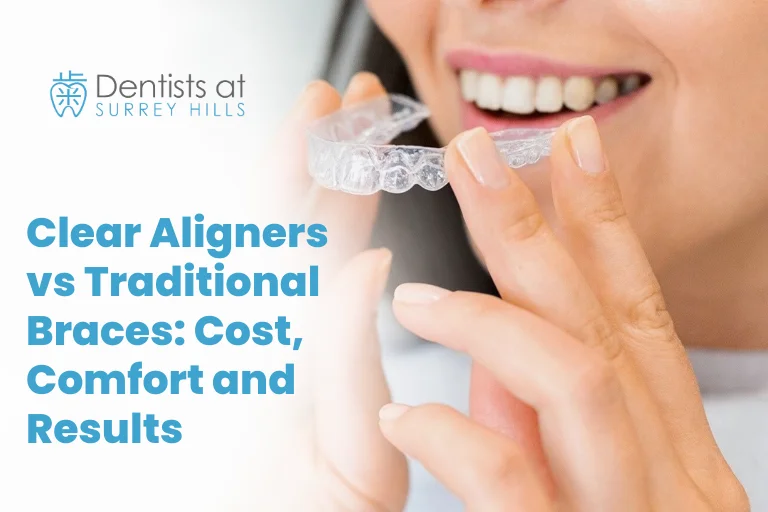
Clear aligners are custom-made transparent trays that gradually move teeth into their desired position.
Patients wear a series of aligners, with each set making small adjustments over time.
Popular clear aligner systems are designed to be removable and nearly invisible when worn.
How Clear Aligners Work
Each aligner is manufactured based on a digital treatment plan.
The trays apply controlled pressure to specific teeth, encouraging gradual movement.
Who They Are Suitable For
Clear aligners can successfully treat many orthodontic issues, including:
- Mild crowding
- Moderate crowding
- Gaps between teeth
- Minor bite concerns
- Relapse after previous orthodontic treatment
More complex cases may require additional attachments or alternative treatment approaches.
What Are Traditional Braces?
Traditional braces use brackets attached to the teeth and wires that gradually guide teeth into position.
Modern braces are smaller and more comfortable than older designs.
They remain one of the most widely used orthodontic treatments worldwide.
How Braces Work
The brackets and archwires apply continuous pressure to move teeth over time.
Regular adjustments allow the orthodontist to guide tooth movement throughout treatment.
Who They Are Suitable For
Traditional braces can treat:
- Mild crowding
- Severe crowding
- Significant bite problems
- Rotated teeth
- Impacted teeth
- Complex orthodontic cases
They are often recommended when precise control of tooth movement is required.
Comparing Cost
Treatment costs vary depending on complexity, treatment length, and individual requirements.
Clear Aligners
Clear aligners are often similar in price to braces, although costs can vary significantly between providers.
Factors That Influence Cost
These may include:
- Number of aligners required
- Treatment complexity
- Additional attachments
- Refinement aligners
- Retention requirements
Traditional Braces
Traditional braces may sometimes be more cost-effective for complex orthodontic cases.
Factors That Influence Cost
These may include:
- Treatment duration
- Type of braces selected
- Complexity of tooth movement
- Additional orthodontic appliances
Which Option Is More Affordable?
There is no universal answer.
For some patients, clear aligners and braces are similarly priced. For others, one treatment may be noticeably more expensive depending on the clinical requirements.
A personalised orthodontic assessment is the most accurate way to determine treatment costs.
Comparing Comfort
Comfort is one of the biggest factors patients consider when choosing orthodontic treatment.
Clear Aligners
Many patients find aligners comfortable because they do not use brackets or wires.
Smooth Surfaces
The trays are made from smooth plastic, reducing irritation to the cheeks and lips.
Fewer Emergency Appointments
There are no wires that can loosen or brackets that can break unexpectedly.
Temporary Pressure
Patients often experience mild pressure when changing to a new aligner, which usually settles within a few days.
Traditional Braces
Braces can cause some discomfort, particularly after adjustments.
Bracket Irritation
Brackets may rub against the inside of the cheeks and lips during the adjustment period.
Wire Adjustments
Orthodontic adjustments can create temporary soreness as teeth begin moving.
Adaptation Period
Most patients adapt to braces within the first few weeks.
Which Option Is More Comfortable?
Many patients report greater day-to-day comfort with clear aligners.
However, comfort is subjective, and individual experiences can vary.
Comparing Appearance
Appearance is often a major consideration for adults and older teenagers.
Clear Aligners
Clear aligners are designed to be discreet.
They are difficult to notice in social, professional, and school environments.
Traditional Braces
Modern braces are less noticeable than older designs but remain visible when smiling and speaking.
Some patients embrace braces as part of their treatment journey, while others prefer a more discreet option.
Which Option Is Less Noticeable?
Clear aligners are generally the more discreet orthodontic treatment.
Comparing Daily Convenience
Orthodontic treatment affects everyday activities, including eating and oral hygiene.
Clear Aligners
Aligners can be removed when eating, drinking most beverages, brushing, and flossing.
Eating
There are typically no food restrictions because aligners are removed during meals.
Oral Hygiene
Brushing and flossing can usually continue as normal.
Traditional Braces
Braces remain attached to the teeth throughout treatment.
Food Restrictions
Patients may need to avoid:
- Hard foods
- Sticky foods
- Chewy foods that could damage brackets
Oral Hygiene Challenges
Cleaning around brackets and wires requires additional care and attention.
Which Option Is More Convenient?
Many patients find clear aligners easier to manage during meals and daily oral hygiene.
Comparing Treatment Results
Both treatments can produce excellent outcomes when planned and monitored appropriately.
Clear Aligners
Modern aligner technology can successfully treat many orthodontic concerns.
Results depend heavily on patient compliance.
Consistent Wear Is Essential
Aligners generally need to be worn for the recommended number of hours each day.
Failure to wear them consistently may delay treatment or affect results.
Traditional Braces
Braces work continuously because they remain attached to the teeth.
Less Reliance on Patient Compliance
Because braces cannot be removed, treatment progress does not depend on daily wear habits.
Suitable for Complex Cases
Braces often provide greater flexibility for managing severe crowding and complicated bite issues.
Which Option Delivers Better Results?
Both can deliver outstanding results.
For straightforward and moderate cases, outcomes may be very similar.
For highly complex cases, traditional braces may provide greater control over certain tooth movements.
Treatment Time Comparison
Treatment duration varies depending on individual circumstances.
Clear Aligners
Some mild cases may be completed relatively quickly.
More complex treatments may require multiple stages and refinement aligners.
Traditional Braces
Treatment times vary significantly based on complexity.
Braces may sometimes be recommended when extensive tooth movement is required.
Which Treatment Is Faster?
Neither option is universally faster.
Treatment length depends more on the complexity of the case than the appliance used.
Who May Be Better Suited to Clear Aligners?
Clear aligners may be a suitable option for patients who:
- Want a discreet treatment option
- Prefer removable appliances
- Have good oral hygiene habits
- Are likely to wear aligners consistently
- Have mild to moderate orthodontic concerns
Who May Be Better Suited to Traditional Braces?
Traditional braces may be recommended for patients who:
- Have significant crowding
- Have complex bite issues
- Need extensive tooth movement
- Prefer not to manage removable appliances
- May struggle with aligner compliance
How to Choose Between Clear Aligners and Braces
The best treatment depends on your individual orthodontic needs, lifestyle, preferences, and clinical requirements.
An orthodontic assessment allows the clinician to evaluate:
Tooth Alignment
The position and movement required for each tooth.
Bite Relationship
How the upper and lower teeth fit together.
Treatment Goals
Cosmetic improvements, functional improvements, or both.
Patient Preferences
Appearance, convenience, lifestyle, and budget considerations.
Final Thoughts
Clear aligners and traditional braces can both deliver excellent orthodontic results. Clear aligners are popular for their discreet appearance, comfort, and convenience, while traditional braces remain highly effective for a wide range of orthodontic problems, including more complex cases. The most suitable option depends on your individual needs, treatment goals, and professional orthodontic assessment. Contact a Surrey Hills dentist to get personalised information regarding which treatment you should opt for.