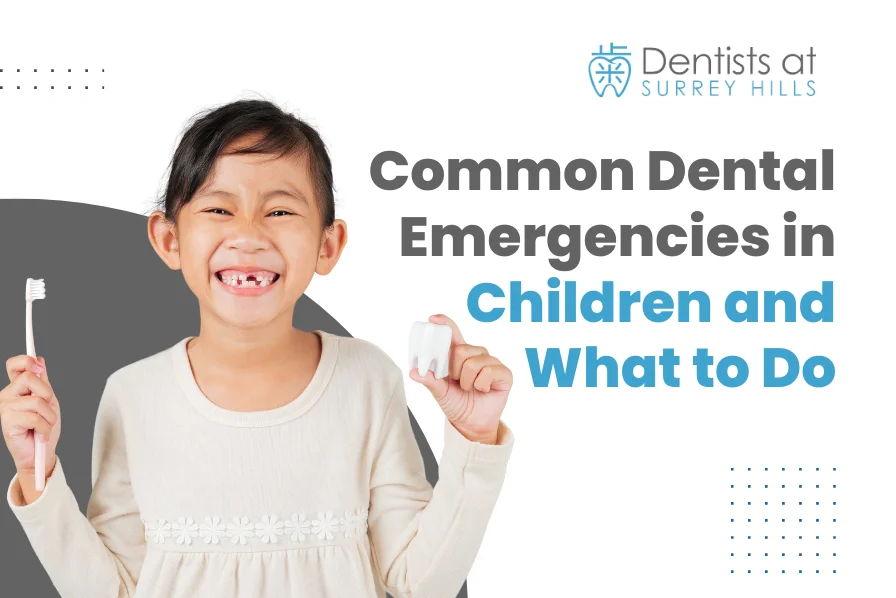
A knocked-out tooth, severe toothache, facial swelling, cracked tooth, or dental injury from a fall are some of the most common dental emergencies in children. Knowing how to respond can help keep your child comfortable and may reduce the risk of long-term damage to their teeth and gums.
Children rarely plan dental emergencies. They usually happen during sport, at school, on the playground, or while simply being energetic kids. While some incidents may only require monitoring, others should be assessed by a dentist as soon as possible.
When Is a Dental Problem an Emergency?
Parents often wonder whether they should call a dentist immediately or wait until the next available appointment.
As a general guide, you should contact a dental clinic promptly if your child has:
- A tooth that has been knocked out
- A tooth that has broken after an accident
- Significant swelling around the mouth or face
- Severe or worsening tooth pain
- Bleeding that does not stop
- A loose permanent tooth
- Signs of a dental infection
If your child is in considerable pain or has swelling that is spreading, it is best not to delay seeking professional advice.
A Tooth Has Been Knocked Out
This is one of the few situations where acting quickly can make a real difference.
Permanent Teeth
If an adult tooth has been knocked out:
- Locate the tooth if possible
- Hold it by the chewing surface rather than the root
- Gently rinse away dirt if needed
- Store the tooth in milk
- Contact an emergency dentist immediately
Even if the tooth looks damaged, bring it to the appointment.
Baby Teeth
If a baby tooth is knocked out, do not try to push it back into place.
The developing adult tooth underneath may be affected if the baby tooth is reinserted incorrectly.
A dentist can assess the area and determine whether any further treatment is necessary.
A Tooth Has Chipped or Cracked
Not every broken tooth causes pain.
Some chips only affect the outer enamel, while others may expose deeper layers of the tooth.
You should:
- Rinse your child’s mouth with water
- Keep any broken pieces if you can find them
- Avoid very hot or cold foods
- Arrange a dental examination
Even small fractures are worth checking because they can sometimes lead to future sensitivity or damage.
Your Child Has a Toothache That Won’t Go Away
Children sometimes complain of tooth pain after eating sweets or drinking something cold. However, pain that continues for several hours or keeps returning should not be ignored.
Possible causes include:
- Tooth decay
- Infection
- Food trapped between teeth
- A cracked tooth
- Gum irritation
A dentist can identify the cause and recommend appropriate dental treatment.
Swelling Around the Face or Gums
Swelling is often a sign that something more serious is developing.
A swollen cheek, swollen gum, or swelling around a tooth may indicate infection.
Other symptoms can include:
- Pain when chewing
- Difficulty sleeping
- Fever
- Bad taste in the mouth
- Tenderness around a particular tooth
These situations usually require prompt assessment by a dental professional.
A Tooth Has Moved After an Injury
Sometimes a tooth is not knocked out completely but shifts position after a fall or sporting accident.
You may notice:
- A tooth that appears crooked
- A gap that was not there before
- Difficulty biting normally
- A tooth that feels unstable
Even if your child is comfortable, a dentist should examine the tooth to assess potential damage beneath the surface.
Cuts to the Lips, Tongue, or Gums
Mouth injuries often bleed more than parents expect.
The tissues inside the mouth contain many small blood vessels, so even a small cut can look dramatic.
For minor injuries:
- Apply gentle pressure using clean gauze
- Use a cold pack on the outside of the mouth
- Monitor the area closely
If bleeding continues or the wound appears deep, seek medical or dental attention.
Something Is Stuck Between the Teeth
Food can occasionally become trapped and cause discomfort or gum irritation.
Before booking a dental appointment, try:
- Gentle flossing
- Rinsing with warm water
- Encouraging your child not to poke the area
Avoid using sharp objects because they can damage the gums and make the situation worse.
Dental Emergencies and Sport
Many childhood dental injuries occur during organised sport.
Football, basketball, rugby, martial arts, and skateboarding are common causes of dental trauma.
A properly fitted mouthguard can significantly reduce the risk of:
- Broken teeth
- Knocked-out teeth
- Soft tissue injuries
- Jaw injuries
If your child participates in contact sport regularly, discuss mouthguard options with your dentist.
How to Reduce the Risk of Dental Emergencies
While accidents can never be eliminated entirely, some habits can lower the risk.
Attend Regular Dental Check-Ups
Routine examinations help identify problems before they become painful emergencies.
Address Small Problems Early
A minor cavity is usually easier to treat than a painful infection.
Encourage Protective Mouthguards
Sports mouthguards provide valuable protection during physical activities.
Teach Good Oral Hygiene Habits
Healthy teeth are generally more resistant to decay and infection.
Frequently Asked Questions
Should I take my child to a dentist after a fall if they seem fine?
Yes. Some dental injuries affect the roots or supporting tissues and may not be obvious immediately.
Can a chipped baby tooth be repaired?
In many cases, yes. Treatment depends on the size and location of the chip.
Is facial swelling a dental emergency?
Facial swelling should always be taken seriously because it may indicate infection.
What if the injury happens after hours?
Many dental clinics offer emergency appointments or can provide advice about the next steps. If severe swelling, uncontrolled bleeding, or significant trauma is involved, seek urgent care.
Final Thoughts
Dental emergencies in children often happen without warning, whether it’s a fall from a bike, a sporting collision, or a toothache that develops overnight. Understanding the most common dental emergencies and knowing when to search for an emergency dentist near me, they can help you respond confidently and protect your child’s oral health. When in doubt, it is always safer to have a dental injury assessed rather than hoping it will resolve on its own.