Bleeding gums, persistent bad breath, swollen gums, and gum tenderness are some of the earliest signs of gum disease, and they should never be ignored. While these symptoms may seem minor at first, they can indicate the beginning of an infection that may eventually affect the gums, supporting bone, and even the stability of your teeth if left untreated.
The good news is that gum disease is often highly treatable when detected early. Recognising the warning signs and visiting a dentist promptly can help prevent more serious dental problems in the future.
What Is Gum Disease?
Gum disease is an infection and inflammation of the tissues that support your teeth.
It usually develops when plaque and bacteria accumulate around the gum line. Over time, this buildup can irritate the gums and trigger an inflammatory response.
The earliest stage of gum disease is known as gingivitis. At this stage, damage can often be reversed with professional dental treatment and improved oral hygiene.
If left untreated, gingivitis can progress to periodontitis, a more advanced condition that may lead to gum recession, bone loss, and tooth loss.
Why Does Gum Disease Develop?
Gum disease can affect people of all ages.
Common contributing factors include:
- Inadequate brushing and flossing
- Plaque and tartar buildup
- Smoking or vaping
- Diabetes
- Hormonal changes
- Certain medications
- Dry mouth
- Family history of gum disease
Even people who brush regularly can develop gum problems if plaque is not effectively removed from difficult-to-clean areas.
Early Signs of Gum Disease
Recognising symptoms early gives you the best chance of avoiding more extensive dental treatment.
Bleeding Gums When Brushing or Flossing
Many people assume occasional bleeding gums are normal.
They are not.
Healthy gums should not bleed during routine brushing or flossing. Bleeding often indicates inflammation caused by bacteria around the gum line.
If your gums regularly bleed, it is a good idea to book a dental examination.
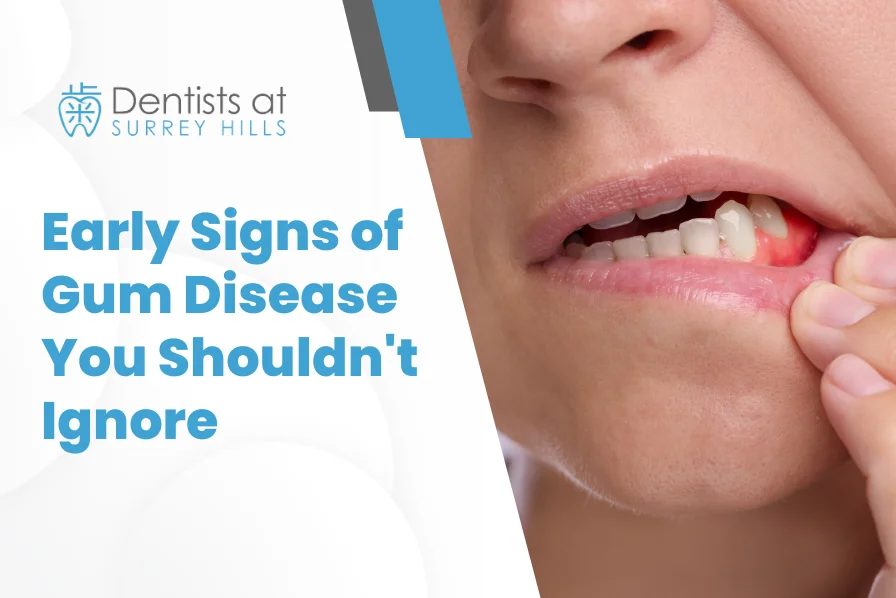
Red or Swollen Gums
Healthy gums are generally firm and pink.
Gums affected by early gum disease may become:
- Red
- Puffy
- Tender
- Inflamed
Swelling often develops gradually, which is why some people fail to notice it until symptoms become more obvious.
Persistent Bad Breath
Bad breath that does not improve with brushing or mouthwash can sometimes be a sign of gum disease.
Bacteria trapped beneath the gums produce unpleasant odours that may continue despite good daily oral hygiene.
If persistent bad breath is becoming a recurring problem, a dentist can assess whether gum disease may be contributing.
Tender or Sensitive Gums
Some people notice discomfort when brushing, flossing, or eating certain foods.
Tender gums often indicate that the tissues are inflamed and reacting to bacterial buildup.
While mild sensitivity may not seem serious, it can be an early warning sign that should not be ignored.
Gums Pulling Away from Teeth
As gum disease progresses, the gums may begin to recede.
You may notice:
- Teeth appearing longer
- Increased sensitivity
- Small gaps near the gum line
- Changes in your smile
Gum recession can expose tooth roots and increase the risk of future dental problems.
Changes in the Way Your Teeth Feel
Some people notice that their teeth feel slightly different when biting or chewing.
In more advanced cases, gum disease may affect the supporting structures around the teeth, causing movement or instability.
Any noticeable changes should be assessed by a dentist.
Signs That Gum Disease May Be Getting Worse
When gum disease progresses beyond its early stages, symptoms often become more noticeable.
Warning signs include:
- Persistent gum bleeding
- Gum recession
- Loose teeth
- Pain when chewing
- Pus around the gums
- Changes in bite alignment
- Increased tooth sensitivity
At this stage, professional dental treatment becomes particularly important to help prevent further damage.
Can Gum Disease Cause Tooth Loss?
Yes.
Advanced gum disease is one of the leading causes of tooth loss in adults.
As the infection progresses, it can damage the bone and tissues that support the teeth. Without adequate support, teeth may eventually become loose and require extraction.
This is one reason why early diagnosis and treatment are so important.
How Is Gum Disease Diagnosed?
During a dental check-up, your dentist will examine your gums for signs of inflammation and infection.
The assessment may include:
- Measuring gum pockets
- Checking for bleeding
- Assessing gum recession
- Taking dental X-rays
- Evaluating plaque and tartar buildup
These examinations help determine the severity of the condition and the most appropriate treatment plan.
How Is Early Gum Disease Treated?
The treatment required depends on the severity of the condition.
Professional Dental Cleaning
A professional clean removes plaque and tartar that cannot be eliminated through brushing alone.
This is often the first step in treating gingivitis.
Improved Oral Hygiene
Your dentist may recommend adjustments to your brushing and flossing routine to help keep the gums healthy.
Regular Dental Check-Ups
Ongoing monitoring allows dental problems to be identified before they become more serious.
Lifestyle Changes
Certain lifestyle changes may help improve gum health, including:
- Quitting smoking
- Reducing sugar intake
- Staying hydrated
- Managing medical conditions such as diabetes
How Can You Prevent Gum Disease?
Preventing gum disease is often easier than treating it.
Simple steps include:
- Brushing twice daily with fluoride toothpaste
- Flossing every day
- Attending regular dental check-ups
- Having professional dental cleans
- Avoiding tobacco products
- Maintaining a healthy diet
Consistent oral hygiene habits can significantly reduce the risk of developing gum disease.
Frequently Asked Questions
Can gum disease go away on its own?
Early gum inflammation may improve with excellent oral hygiene, but professional dental treatment is often needed to remove plaque and tartar buildup effectively.
Are bleeding gums always a sign of gum disease?
Not always, but bleeding gums are one of the most common early symptoms. If bleeding occurs regularly, it is worth arranging a dental examination.
Is gum disease painful?
Early gum disease is often painless, which is why many people do not realise they have it. Symptoms frequently become more noticeable as the condition progresses.
How often should I visit a dentist to prevent gum disease?
Most people benefit from regular dental check-ups every six months, although your dentist may recommend a different schedule based on your oral health needs.
Final Thoughts
Early signs of gum disease often include bleeding gums, swollen gums, bad breath, tenderness, and gum recession. These symptoms may seem minor at first, but they can indicate the beginning of a condition that may eventually affect the health and stability of your teeth. The earlier gum disease is identified, the easier it is to treat. If you have noticed any of these warning signs, booking an appointment with a dentist near you can help protect your oral health and prevent more serious problems from developing.