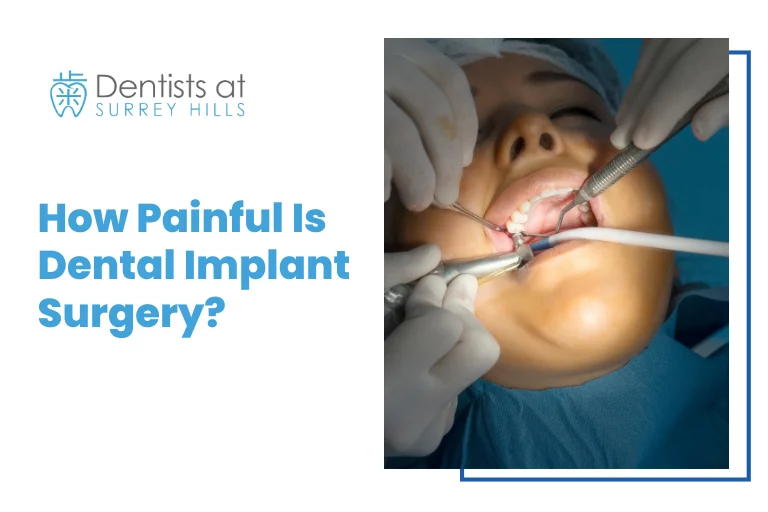
Dental implant surgery should not be painful while it is being performed because the area is numbed with local anaesthetic. You may feel pressure, vibration or movement, but you should not feel sharp pain.
Once the anaesthetic wears off, some soreness, swelling and tenderness are normal. For many patients, the discomfort is manageable and begins to improve after the first few days. The level of pain varies depending on the number of implants placed, whether bone grafting is required and how the individual patient heals.
Does Dental Implant Surgery Hurt During the Procedure?
Before the surgery begins, the dentist gives a local anaesthetic to numb the implant site and surrounding tissues. This is similar to the anaesthetic used for many other dental procedures.
During the operation, you may notice:
- Pressure in the treated area
- Vibration from dental instruments
- Pulling or pushing sensations
- Sounds from the equipment
These sensations can feel unusual, but they should not be painful. If you feel pain at any stage, you should tell the dentist so that more anaesthetic can be given.
The dentist will check that the area is properly numb before making an incision or preparing the bone for the implant.
What If You Feel Anxious About Implant Surgery?
Feeling nervous before dental implant surgery is common. Anxiety can make normal pressure and movement feel more intense, even when the area is fully numb.
Tell your dentist if you are worried about the procedure. They can explain what will happen, answer your questions and arrange breaks if needed. Some clinics may also offer sedation for suitable patients.
Sedation can help you feel calmer, but local anaesthetic is still required to block pain in the treatment area. The type of sedation available and whether it is appropriate will depend on your health, the complexity of the procedure and the clinic’s facilities.
When Does the Pain Usually Begin?
Discomfort usually begins after the local anaesthetic wears off. This may happen several hours after the appointment.
The treated area may feel sore, tender or bruised. You may also notice swelling around the gums or face. These effects are part of the normal healing response following surgery.
Pain is often most noticeable during the first two or three days. It should then gradually improve. Some tenderness may remain for longer, particularly when several implants have been placed or additional procedures were completed at the same time.
How Much Pain Is Normal After Dental Implant Surgery?
Normal discomfort is generally manageable and improves with time. It should respond to the pain relief recommended by your dentist and should not continue to become more severe.
Common symptoms after implant placement include:
- Soreness around the implant site
- Mild to moderate swelling
- Gum tenderness
- Minor bleeding or oozing
- Bruising on the gum or face
- Discomfort when opening the mouth
- Sensitivity when eating near the area
The intensity varies between patients. A straightforward single implant may cause relatively mild discomfort. Treatment involving several implants, a larger incision or extensive grafting can produce more swelling and soreness.
Pain alone is not the best measure of how well the implant is healing. The pattern is more important. Normal post-operative pain should gradually settle rather than suddenly worsen.
Is Dental Implant Surgery More Painful Than a Tooth Extraction?
The experience depends on the complexity of each procedure.
A straightforward implant placement can sometimes cause less discomfort than a difficult tooth extraction. When placing an implant, the dentist works in a carefully planned area and does not need to remove an inflamed or badly damaged tooth.
However, implant treatment may feel more uncomfortable when:
- Several implants are placed
- A damaged tooth is removed during the same appointment
- Bone grafting is performed
- A sinus lift is required
- The surgery involves a larger treatment area
There is no single pain level that applies to every patient. The condition of the site and the extent of the surgery matter more than the name of the procedure.
Does a Bone Graft Make Implant Surgery More Painful?
A small bone graft placed around an implant may add some soreness, but it does not always cause a major difference in pain.
A larger graft can produce more swelling and a longer period of discomfort because a wider area has been treated. If bone is taken from another part of your mouth, both the grafted area and the donor site need to heal.
A sinus lift may also cause pressure, swelling or a blocked feeling around the cheek and sinus area. Your dentist should explain what level of discomfort is expected for the specific procedure being planned.
How Long Does the Pain Last?
Pain commonly improves within a few days. Swelling may become more noticeable during the first two or three days before it begins to settle.
A general recovery pattern may look like this:
The First 24 Hours
The area may remain numb for several hours. Mild bleeding, soreness and swelling can begin as the anaesthetic wears off.
Days Two and Three
Swelling and tenderness may be more noticeable. This does not necessarily mean that there is a problem, especially if the symptoms remain manageable.
Days Four to Seven
Pain and swelling should begin to reduce. The implant site may still feel tender when eating or brushing nearby.
After the First Week
Most of the initial surgical discomfort should have improved. More extensive procedures may take longer to settle, but the overall direction should still be towards recovery.
These timeframes are only a general guide. Your dentist can give you a more accurate expectation based on the treatment performed.
How Can You Manage Pain After Implant Surgery?
Your dentist will provide instructions based on your procedure and medical history. Follow these directions carefully, including advice about pain relief, mouth care and eating.
Helpful measures may include:
- Taking recommended pain relief as directed
- Applying a cold pack to the outside of the face
- Eating soft foods during the early healing period
- Chewing on the opposite side where possible
- Avoiding very hot food and drinks soon after surgery
- Keeping the mouth clean without disturbing the wound
- Avoiding smoking and alcohol during healing
- Resting after the procedure
Do not place aspirin or other medication directly onto the gum. This can irritate or damage the tissue. You should also avoid taking medicines that have not been approved by your dentist, doctor or pharmacist, particularly if you have a medical condition or take other medication.
What Should You Eat After Dental Implant Surgery?
Choose soft foods that require little chewing while the area is tender. Suitable options may include yoghurt, eggs, mashed vegetables, soft pasta and cooled soup.
Avoid hard, crunchy or sharp foods that could disturb the implant site. Small foods such as seeds may also become trapped around the wound.
Wait until the numbness has worn off before chewing. Eating while the mouth is numb can lead to accidental biting of the cheek, lip or tongue.
You can gradually return to your usual diet as the area becomes more comfortable and according to your dentist’s instructions.
When Is Pain a Sign of a Problem?
Pain that steadily improves is usually part of normal healing. Contact your dentist if the pain becomes stronger after it had started to settle or remains severe despite following the recommended care instructions.
You should also seek advice if you experience:
- Increasing swelling after several days
- Persistent or heavy bleeding
- Fever or feeling generally unwell
- Pus or an unpleasant taste from the implant site
- Numbness that continues after the anaesthetic should have worn off
- Difficulty swallowing or breathing
- A loose implant or temporary tooth
Severe swelling that affects breathing or swallowing requires urgent medical attention.
Early assessment allows the dentist to check for infection, irritation, pressure from a temporary tooth or another healing problem.
Will the Implant Hurt While It Bonds With the Bone?
The implant usually remains in the jaw for several weeks or months while the surrounding bone heals around it. This process should not cause ongoing pain.
You may notice mild tenderness during the early healing stage, but the implant should become comfortable as the tissue recovers. Persistent pain during the later healing period is not considered normal and should be checked by your dentist.
When the final crown, bridge, or denture is attached, it may take a short time to adjust to the new tooth. It should not feel painful or interfere heavily with your bite.
Final Answer
Dental implant surgery should not hurt while it is being performed because local anaesthetic is used to numb the area. Some soreness, swelling and tenderness are expected after the anaesthetic wears off, particularly during the first few days.
The discomfort should be manageable and gradually improve. The recovery may take longer when several implants, bone grafting or a sinus lift are involved. If pain becomes stronger, lasts longer than expected or appears with signs of infection, contact your dentist for advice.
More Resources: