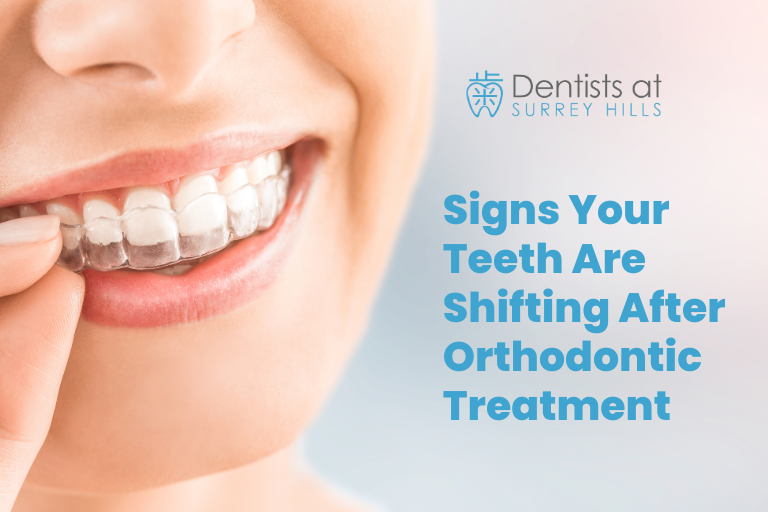
Teeth can shift after orthodontic treatment if retainers are not worn consistently, natural changes occur in the mouth, or pressure from surrounding teeth gradually moves them out of position.
Many people assume their teeth will stay perfectly straight once braces or clear aligners are removed. In reality, teeth have a natural tendency to move throughout life. While some minor changes are common, noticeable movement may indicate that your teeth are relapsing towards their original position.
The earlier shifting is identified, the easier it is to correct. Knowing what to look for can help protect the time, effort, and investment made during orthodontic treatment.
Why Do Teeth Shift After Orthodontic Treatment?
Orthodontic treatment moves teeth through bone and supporting tissues. Once treatment ends, those tissues need time to stabilise.
Even after successful treatment, teeth are not permanently locked into place.
Natural Ageing Changes
Teeth naturally move throughout life.
Small shifts can occur as the jaw changes shape, teeth experience daily chewing forces, and surrounding structures adapt over time.
Not Wearing Retainers
Retainers play a critical role in maintaining orthodontic results.
Skipping retainer wear for extended periods is one of the most common reasons teeth begin to move.
Teeth Grinding and Clenching
Excessive pressure from grinding or clenching can contribute to unwanted tooth movement.
Wisdom Teeth and Other Dental Changes
While wisdom teeth are not always responsible for crowding, changes elsewhere in the mouth can affect alignment and spacing.
Common Signs Your Teeth Are Shifting
Teeth often move gradually, making changes difficult to notice at first.
Your Retainer Feels Tight
A retainer that suddenly feels tight may be one of the earliest warning signs.
Increased Pressure When Wearing It
If the retainer feels uncomfortable or difficult to insert after previously fitting well, some tooth movement may have occurred.
Difficulty Seating the Retainer
A retainer should fit comfortably and completely. If it no longer sits properly, your teeth may have shifted.
Teeth Look Less Straight
Many people first notice changes when comparing recent photos with older photographs.
Small movements may become visible before they cause any discomfort.
New Crowding Appears
Crowding often develops in the front teeth, particularly in the lower jaw.
You may notice:
- Teeth overlapping slightly
- Rotation of individual teeth
- Reduced spacing between teeth
- Changes in alignment that were not present after treatment
Gaps Begin to Reappear
Spaces that were closed during orthodontic treatment can sometimes reopen.
This is particularly common between front teeth.
Changes in Your Bite
A shifting bite may feel different when you close your mouth.
Some patients notice that teeth no longer meet evenly or comfortably.
Teeth Feel Different When Chewing
Minor changes in alignment can alter how teeth contact one another during eating.
You may notice:
- Uneven pressure
- Teeth touching earlier than before
- Difficulty biting certain foods
Speech Changes
Although less common, noticeable tooth movement can occasionally affect speech patterns, particularly when front teeth shift.
Signs Others May Notice Before You Do
Because tooth movement is often gradual, family members or friends may notice changes first.
Changes in Your Smile
Photographs taken months apart sometimes reveal movement that is difficult to recognise day to day.
Visible Rotation of Teeth
Teeth that begin turning or twisting can become noticeable when speaking or smiling.
Changes in Tooth Spacing
New gaps or crowding may be easier for others to spot than for the person experiencing them.
Which Teeth Are Most Likely to Shift?
While any tooth can move, certain areas are more prone to relapse.
Lower Front Teeth
The lower front teeth are particularly susceptible to crowding over time.
This is one of the most common areas where post-treatment shifting occurs.
Upper Front Teeth
Small gaps or rotations can develop in the upper front teeth, especially if retainers are not worn as instructed.
How Much Movement Is Normal?
Not every change indicates a problem.
Minor movement over many years can be a normal part of ageing.
However, you should seek professional advice if you notice:
- Visible crowding
- Reopening gaps
- Changes in your bite
- Difficulty fitting retainers
- Teeth becoming noticeably less straight
What Happens If Shifting Is Ignored?
Small movements can gradually become larger over time.
Depending on the severity, this may result in:
Increased Crowding
Teeth can become more difficult to clean, increasing the risk of plaque build-up and gum problems.
Bite Problems
Changes in alignment may place uneven pressure on teeth and jaw joints.
More Complex Future Treatment
Minor relapse may be corrected relatively easily.
More significant movement can require additional orthodontic treatment.
Can Shifting Be Corrected?
In many cases, yes.
The appropriate treatment depends on the amount of movement that has occurred.
Retainer Adjustments
Very minor changes may be managed with retainer modifications or replacement retainers.
Clear Aligners
Mild to moderate relapse can often be corrected using clear aligner treatment.
Braces
More significant movement may require comprehensive orthodontic treatment.
How to Prevent Teeth From Shifting
Preventing relapse is generally easier than correcting it.
Wear Your Retainer as Directed
Consistent retainer use remains the most effective way to maintain orthodontic results.
Attend Regular Dental Check-Ups
Routine examinations can identify small changes before they become significant.
Replace Worn Retainers
Retainers do not last forever.
Damaged or worn retainers may become less effective at holding teeth in position.
Address Teeth Grinding
If you grind or clench your teeth, a local dentist near you may recommend a custom night guard to protect your teeth and orthodontic results.
When Should You See an Orthodontist?
You should schedule an orthodontic assessment if your retainer no longer fits properly, your teeth appear less straight, gaps are reopening, crowding is developing, or your bite feels different.
Early intervention often provides more treatment options and may reduce the amount of correction required.
Final Thoughts
Teeth can shift after orthodontic treatment, even years after braces or clear aligners are removed. Tight retainers, new crowding, reopening gaps, and changes in your bite are often early warning signs. Recognising these changes early and seeking professional advice can help preserve your smile and avoid more extensive orthodontic treatment later.