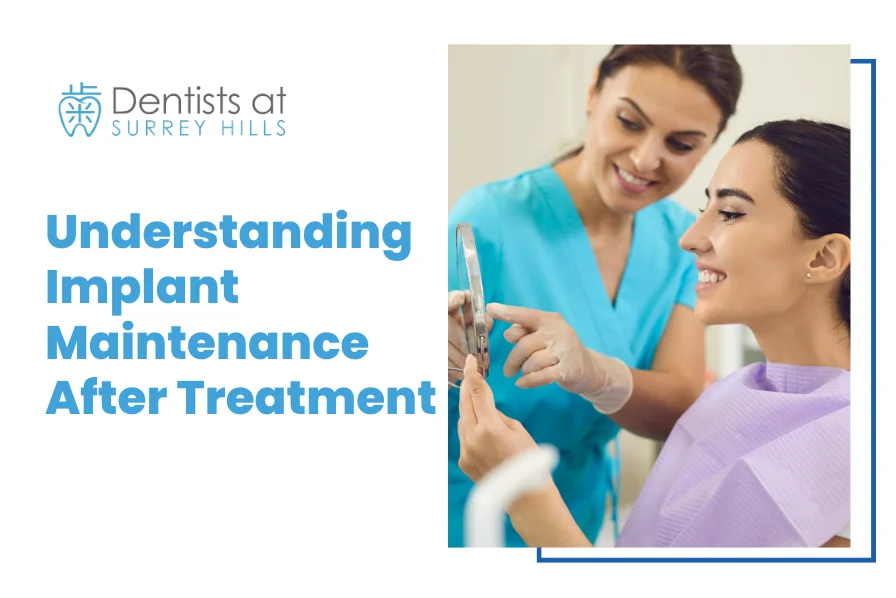
Implant maintenance includes daily brushing, cleaning between your teeth, regular dental check-ups, and professional cleaning to help keep your implant and gums healthy.
Many people think that once a dental implant is fitted, the treatment is finished. In reality, your implant still needs regular care. While the implant itself cannot get a cavity, the gums and bone around it still need attention.
The good news is that caring for a dental implant is not complicated. In most cases, it involves the same habits that help keep your natural teeth healthy. A little care each day and regular visits to your dentist can help avoid problems and keep your implant working well for many years.
Why Implant Maintenance Matters
Dental implants are strong and designed to last a long time. However, they still rely on healthy gums and bone for support.
If plaque is allowed to build up around the implant, the gums can become sore, swollen, or start bleeding. If these early signs are ignored, the problem can become more serious and may affect the bone holding the implant in place.
Most implant problems develop slowly. They usually do not happen overnight. This is why regular cleaning and check-ups are so important.
Looking After Your Implant at Home
Brush Twice a Day
Brushing is one of the simplest and most effective ways to care for your implant.
Use a soft toothbrush and clean around the implant just as you would your natural teeth. Pay attention to the gum line because this is where plaque often collects.
Electric toothbrushes can also be helpful if you prefer using one.
Clean Between Your Teeth
A toothbrush cannot reach every area of your mouth.
Food and plaque can collect between teeth and around implants. Cleaning these spaces every day helps keep your gums healthy and reduces the chance of problems developing.
Some common options include:
- Dental floss
- Interdental brushes
- Water flossers
Your dentist can recommend the option that suits your situation best.
Be Consistent
Many people think they need special products to care for an implant. In most cases, consistency is more important than expensive products.
Brushing properly every day and cleaning between your teeth regularly can make a big difference.
Why Regular Dental Visits Are Important
Even if your implant feels completely normal, regular dental visits are still important.
Some problems do not cause pain straight away. Your dentist may notice early changes before you can see or feel them yourself.
Regular check-ups allow your dentist to:
- Check the implant is stable
- Look at the health of your gums
- Remove hard build-up that cannot be removed at home
- Spot small issues before they become larger ones
Many patients only think about visiting the dentist when something hurts. With implants, prevention is usually much easier than treatment.
Signs That Something May Be Wrong
Most implants heal and function without any problems. However, it is important to know what to watch for.
Contact your dentist if you notice:
- Bleeding around the implant
- Swollen or tender gums
- Bad breath that does not improve
- Pain around the implant
- Pus around the gum line
- A loose crown
- Changes when chewing
These signs do not always mean there is a serious problem, but they should be checked as soon as possible.
Can Gums Around Implants Become Infected?
Yes.
Although the implant itself cannot decay, bacteria can still affect the gums around it.
When plaque builds up, the gums may become irritated and start bleeding. If this is not treated, the infection can spread deeper and affect the bone supporting the implant.
This is one of the main reasons dentists encourage regular maintenance after implant treatment.
The earlier a problem is found, the easier it is usually to manage.
Lifestyle Habits That Affect Implants
Smoking
Smoking can make it harder for your gums to stay healthy.
It can also slow healing and increase the chance of problems around the implant.
Patients who smoke generally have a higher risk of implant-related issues than non-smokers.
Teeth Grinding
Some people grind or clench their teeth without realising it, especially while sleeping.
This places extra pressure on both natural teeth and implants.
If you grind your teeth, your dentist may suggest a custom-made night guard to help protect your smile.
General Health
Your overall health can also affect how well your implant performs over time.
Conditions such as poorly controlled diabetes can make it more difficult for the body to heal and fight infection.
Looking after your general health often helps your oral health as well.
How Long Can Dental Implants Last?
There is no exact answer because every person is different.
Some implants have remained in place for several decades. Others may need additional treatment if problems develop.
The lifespan of an implant often depends on:
- Daily cleaning habits
- Gum health
- Smoking habits
- Regular dental visits
- Overall health
In many cases, people who care for their implants properly enjoy many years of comfortable use.
Common Questions About Implant Maintenance
Do implants need special cleaning?
Not usually. Most implants can be cared for using normal brushing and cleaning between the teeth. Your dentist may recommend additional tools if needed.
Can dental implants get cavities?
No. Implants cannot develop tooth decay. However, the gums and bone around them can still be affected by plaque and bacteria.
How often should I have my implant checked?
For most people, every six months is a good starting point. Your dentist may recommend more frequent visits depending on your situation.
Is bleeding around an implant normal?
No. Bleeding is usually a sign that the gums need attention and should be checked by a dentist.
Can smoking affect my implant?
Yes. Smoking increases the risk of gum problems and can affect the long-term health of the implant.
What happens if an implant develops a problem?
The treatment will depend on the cause. In many cases, early treatment can stop the problem from becoming more serious.
Final Thoughts
Dental implants are a reliable way to replace missing teeth, but they still need regular care after treatment. Brushing, cleaning between your teeth, and attending routine dental visits all play a part in keeping your implant healthy.
Most problems can be avoided when they are found early. By looking after your implant and your gums, you give yourself the best chance of enjoying a comfortable and healthy smile for many years.