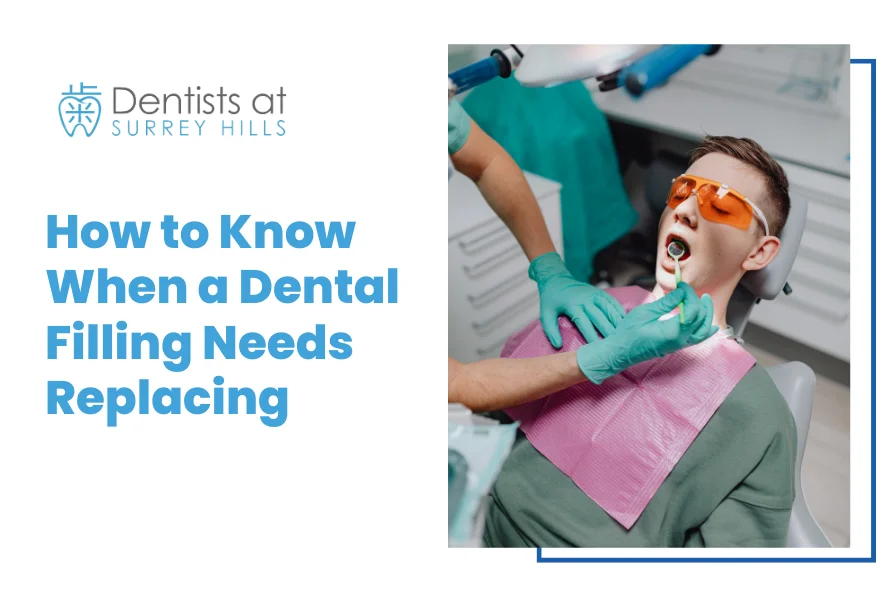
A dental filling may need replacing if it becomes worn, cracked, loose, painful, discoloured, or no longer seals the tooth properly.
Many fillings last for years, but they do not last forever. Every time you chew, grind your teeth, or eat hot and cold foods, the filling and the tooth around it are placed under stress. Over time, small changes can develop that are difficult to see at home.
The challenge is that a failing filling does not always cause immediate pain. In many cases, problems develop gradually. Understanding the warning signs can help you avoid larger dental treatments later.
How Long Do Dental Fillings Last?
The lifespan of a filling depends on several factors, including the material used, the size of the filling, your oral hygiene habits, and whether you grind or clench your teeth.
Composite (White) Fillings
Composite fillings are commonly used because they blend with natural teeth.
They typically last between 5 and 10 years, although many can last longer with good care.
Amalgam (Silver) Fillings
Amalgam fillings are known for their durability and may last 10 to 15 years or more.
Many older amalgam fillings are still functioning well decades after placement.
Large Fillings
Larger fillings often experience more pressure during chewing and may require replacement sooner than smaller restorations.
Signs a Dental Filling May Need Replacing
Not every filling that looks old needs to be replaced. However, certain signs should not be ignored.
Tooth Sensitivity
Sensitivity is one of the most common indicators that a filling may no longer be sealing the tooth properly.
Sensitivity to Cold
If a tooth suddenly reacts to cold drinks, ice cream, or cold air, there may be a gap developing between the filling and the tooth.
Sensitivity to Heat
Discomfort when drinking hot coffee or tea can also indicate that the tooth underneath the filling is becoming exposed.
Pain When Biting
A filling that has cracked, shifted, or loosened can create pressure when you bite down.
Some people notice a sharp pain only when chewing certain foods.
Others describe it as a brief jolt when their teeth come together.
Visible Cracks or Damage
Fillings can develop small fractures over time.
You may notice:
- A crack in the filling
- A chipped edge
- Missing pieces
- Rough surfaces
Even small fractures can allow bacteria to enter underneath the restoration.
Food Frequently Getting Stuck
If food suddenly begins catching between teeth where it never did before, the shape of the filling may have changed.
This can increase the risk of gum irritation and tooth decay.
Dark Staining Around the Filling
A dark line around a filling does not always mean there is a problem.
However, staining can sometimes indicate leakage or decay developing underneath the restoration.
A dental examination is the best way to determine the cause.
A Loose or Moving Filling
A filling should feel completely stable.
If it feels loose, moves when touched, or seems different when you run your tongue over it, it should be checked promptly.
A Missing Filling
Sometimes a filling falls out entirely.
This may leave a hole in the tooth that collects food and bacteria.
A lost filling should be replaced as soon as possible to prevent further damage.
Can Tooth Decay Develop Under a Filling?
Yes.
One of the most common reasons for replacing a filling is recurrent decay.
This occurs when bacteria enter tiny gaps around the edge of an existing filling and begin causing decay underneath it.
Because the decay is hidden, patients often do not realise there is a problem until:
- Pain develops
- Sensitivity increases
- The filling breaks
- The dentist identifies it on an X-ray
Why Fillings Fail
Fillings are strong, but they are not indestructible.
Everyday Wear and Tear
Years of chewing gradually wear down both the filling and the surrounding tooth structure.
Teeth Grinding
People who clench or grind their teeth often place significantly more pressure on fillings.
This can cause cracking and premature failure.
Large Existing Restorations
The larger the filling, the less natural tooth structure remains to support it.
This increases the likelihood of fractures over time.
Changes in the Tooth
Teeth naturally expand and contract slightly when exposed to hot and cold temperatures.
Over many years, these small movements can affect the seal between the filling and the tooth.
Should Old Fillings Be Replaced Even If They Don’t Hurt?
Not necessarily.
Age alone is not a reason to replace a filling.
Many fillings continue to function perfectly despite being several years old.
Dentists generally recommend replacement when there is evidence of:
- Cracking
- Leakage
- Decay
- Structural weakness
- Poor fit
- Damage to the surrounding tooth
Replacing fillings too early can sometimes remove healthy tooth structure unnecessarily.
How Dentists Check Existing Fillings
During a routine dental examination, dentists assess both the filling and the surrounding tooth.
This may include:
Visual Examination
The dentist looks for cracks, wear, staining, and changes around the restoration.
Dental X-Rays
X-rays can reveal decay hidden beneath fillings or between teeth.
Bite Assessment
The dentist checks whether the filling is affecting your bite or placing excessive pressure on the tooth.
Physical Testing
Special instruments may be used to check for movement, gaps, or weakened areas.
What Happens If a Filling Is Not Replaced?
Ignoring a failing filling can allow a small problem to become a much larger one.
Possible consequences include:
- Tooth decay progressing deeper into the tooth
- Tooth fractures
- Infection of the dental pulp
- Root canal treatment
- Dental crowns
- Tooth loss in severe cases
Early intervention is generally simpler, less invasive, and more affordable.
How to Make Your Fillings Last Longer
While no filling lasts forever, good habits can help extend their lifespan.
Maintain Regular Dental Check-Ups
Routine examinations allow dentists to identify small issues before they become major problems.
Brush and Floss Daily
Good oral hygiene reduces the risk of decay around existing fillings.
Wear a Night Guard if Recommended
Patients who grind their teeth can place significant stress on restorations while sleeping.
Avoid Using Teeth as Tools
Opening packaging or biting hard objects can crack both teeth and fillings.
When Should You See a Dentist?
You should book a dental appointment if you notice sensitivity, pain when biting, visible cracks, a loose filling, food trapping around a restoration, or changes in how the tooth feels.
Many filling problems can be treated quickly when detected early. Waiting until severe pain develops often means the damage has already progressed further than necessary.
Final Thoughts
A dental filling may need replacing when it becomes worn, cracked, loose, painful, or no longer seals the tooth effectively. While fillings can last for many years, regular dental examinations remain the best way to identify hidden problems before they lead to more extensive treatment.
Read More: How Do Dental Fillings Work?