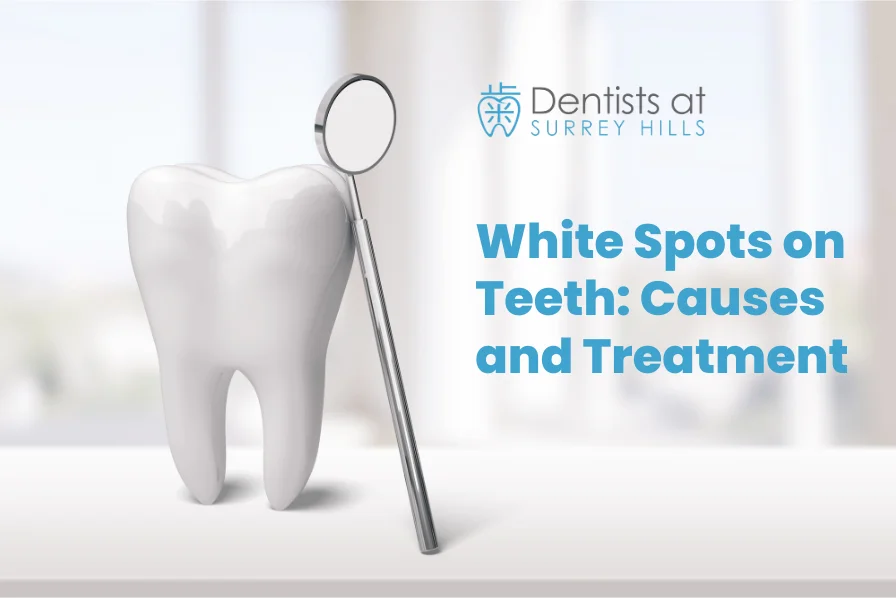
White spots on teeth are usually caused by mineral loss in the enamel. This is called early enamel damage and is often the first visible sign of a problem before cavities form.
In many cases, white spots can be treated or improved, especially if caught early.
What are white spots on teeth?
White spots are areas where the enamel has lost minerals like calcium.
This process is called Enamel Hypomineralisation or early demineralisation.
Instead of looking smooth and slightly shiny, these areas appear:
- Chalky
- Dull
- Whiter than the surrounding tooth
These spots are weaker than normal enamel and can develop into cavities if not managed.
Common causes of white spots
There is no single cause. White spots usually develop from one of the following:
1. Plaque build-up and poor oral hygiene
- Bacteria sit on teeth for long periods
When plaque is not removed properly, bacteria produce acids that attack enamel.
- Acid removes minerals from enamel
This weakens the surface and creates visible white patches.
- Common around braces or gum line
White spots often appear where cleaning is difficult.
This is one of the most common causes, especially in people with inconsistent brushing or flossing habits.
2. Braces (orthodontic treatment)
- Brackets trap plaque
Food and bacteria easily collect around braces.
- Harder to clean properly
Even with good effort, some areas are difficult to reach.
- White spots after braces removal
These spots often become noticeable once braces are taken off.
This is why careful cleaning during orthodontic treatment is very important.
3. Too much fluoride during tooth development
This condition is called Dental Fluorosis.
- Excess fluoride affects enamel formation
It changes how enamel develops in childhood.
- Leads to white streaks or patches
These marks are usually symmetrical across teeth.
- Occurs during early years only
It does not develop in adults.
Mild fluorosis is common and usually cosmetic.
4. Acidic foods and drinks
- Frequent acid exposure
Drinks like soft drinks, sports drinks, and citrus juices weaken enamel.
- Repeated enamel softening
Acid removes minerals over time.
- Leads to visible enamel changes
White spots can appear before more serious erosion happens.
Diet plays a bigger role than many people expect.
5. Dry mouth
- Less saliva means less protection
Saliva helps neutralise acid and repair enamel.
- Enamel does not remineralise properly
Without saliva, the repair process slows down.
- Higher risk of white spots and decay
Dry mouth creates an environment where damage builds up faster.
This can be caused by medications or certain health conditions.
Can white spots be reversed?
In early stages, yes.
If the enamel surface is still intact, minerals can be added back. This process is called remineralisation.
However, if the damage is deeper, cosmetic treatment may be needed instead.
Treatment options for white spots
The right treatment depends on the cause and severity.
1. Improved oral hygiene
- Brushing twice daily
This removes plaque and reduces acid exposure.
Flossing cleans areas where white spots often start.
- Consistent routine
Regular care allows enamel to recover over time.
In early cases, this alone can improve the appearance.
2. Fluoride treatment
- Strengthens enamel
Fluoride helps rebuild weakened areas.
- Professional or at-home products
Dentists may recommend stronger fluoride treatments.
- Slows or stops progression
It prevents white spots from turning into cavities.
Fluoride is one of the most effective ways to support enamel repair.
3. Remineralising products
- Products with calcium and phosphate
These provide the minerals enamel needs.
- Helps repair early damage
They support natural remineralisation.
- Used regularly over time
Results are gradual, not immediate.
These are often used alongside fluoride for better results.
4. Microabrasion
- Removes a thin enamel layer
A dentist gently removes the outer surface.
- Improves appearance
This blends white spots with the surrounding enamel.
- Suitable for mild cases
Not used for deep damage.
This is a cosmetic solution when remineralisation is not enough.
5. Teeth whitening
- Evens out tooth colour
Whitening makes surrounding enamel lighter.
- Reduces contrast
White spots become less noticeable.
- Not always suitable
Results depend on the type of spot.
This is often combined with other treatments.
6. Resin infiltration (ICON treatment)
- Fills porous enamel
A special resin is applied to the affected area.
- Matches natural tooth colour
It blends the white spot with the rest of the tooth.
- Minimally invasive
No drilling is required.
This is one of the most effective modern treatments for visible white spots.
7. Dental veneers (for severe cases)
- Covers the front of the tooth
A thin shell is placed over the enamel.
- Provides a uniform appearance
All spots are hidden completely.
- Used for advanced cases
Usually when other treatments are not enough.
This is a more permanent cosmetic option.
How to prevent white spots
Prevention is much easier than treatment.
- Brush twice daily with fluoride toothpaste
This keeps plaque under control and strengthens enamel.
- Floss daily
Prevents build-up between teeth.
- Limit sugary and acidic drinks
Reduces enamel damage.
- Drink water regularly
Helps maintain saliva flow.
- Maintain regular dental check-ups
Early signs can be treated before they worsen.
When should you see a dentist?
You should get white spots checked by your family dentist if:
- They are increasing in size
- They appeared suddenly
- You recently removed braces
- You are unsure of the cause
Early treatment can stop progression and improve appearance.
Quick summary
- White spots are caused by enamel mineral loss
- The most common cause is plaque build-up
- Early stages can be reversed
- Treatment ranges from hygiene to cosmetic options
- Prevention is based on consistent daily care